
Flexible PCB Printer Print Solder Masks
A solder mask is a critical component of a PCB and serves multiple essential functions. These include protecting copper surfaces, defining openings for components and traces, and ensuring proper soldering. This layer is also responsible for the overall quality and reliability of a printed circuit board. In the past, a solder mask was applied using screen printing and heat curing. However, today we can print a solder mask with UV-curable inks that are both durable and flexible.
A PCB’s solder mask protects the copper surface from contaminants and moisture during manufacturing, assembly and soldering. It is often green or blue, but it can be any color. It is deposited as a thin layer of polyimide or epoxy over the entire surface of a PCB. It is designed to withstand the high temperatures and chemicals used in PCB fabrication and cleaning. It is also resistant to the effects of environmental factors such as alpha, beta and gamma radiation.
The choice of color for the solder mask is up to the individual designer, although most designers choose green because it is less expensive than other colors and it provides a clear contrast against the copper surface of the traces and pads. It is also known to resist wear and tear in production, which is an advantage when making prototypes of products that will be subjected to constant use.
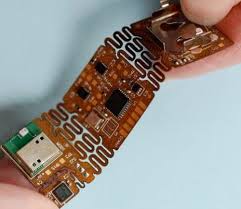
Can a Flexible PCB Printer Print Solder Masks?
There are two main methods for applying a flexible pcb printer solder mask: additive and subtractive. Additive methods involve coating the bare laminate with a photosensitive mask, which is then illuminated and developed to remove the unexposed areas. The remaining areas are then sensitized and plated with copper ions which bond with the exposed metal on the PCB’s surface. Once the copper has cooled, the mask is stripped and the board is finished.
PCBWay’s newest machines are capable of printing a solder mask layer with a high level of accuracy, compared to traditional screen-printing. This means that we can produce high-quality, low-cost flex or rigid-flex PCBs with a solder mask layer that conforms to industry standards and meets your design specifications.
When choosing a solder mask for your PCB, it is important to consider the size and layout of the components, holes and conductors, as well as the environment in which the board will be used. This will help determine the type of mask to use, as well as the materials and thicknesses of the other layers. For example, the copper and solder mask layers need to be thick enough to withstand the thermal stresses and bending of a flex or rigid-flex PCB.
For the best results, it is a good idea to use matt ink for your PCB’s solder mask. This ink will not increase the thickness of the printed circuit boards, and it will look more natural than glossy ink. In addition, matt ink is more durable than gloss, which can crack and delaminate over time. It is also worth remembering that the bend radius of a flex or rigid-flex circuit board is critical. It is important to define this early in the design process, so that your PCB can withstand its required number of bends without damage to the copper surface.