
flexible PCB boards environmentally friendly
When it comes to integrating components abundantly in a compact space, few electronics do this better than flex PCBs. These circuit boards feature conductive tracks on a non-conductive substrate and are used in a range of applications. They are designed to withstand vibration and dissipate heat, as well as fold and conform to various shapes. Unlike rigid printed circuit boards, which consist of a woven fiberglass impregnated with epoxy resin, flexible PCBs have a flexible base material, such as polyimide. As a result, they can bend and flex to accommodate changing external environments and design requirements.
The flexibility of these circuits makes them ideal for curved displays. This allows devices like smartphones to fit comfortably in the palm of a hand, and fitness trackers to be optimized for the wrist’s contour. flexible pcb board also allow designers to incorporate more complex features into their products, enhancing functionality and user experience.
Because flex circuits can fold and conform to specific shapes, they are better suited for rugged environments than traditional rigid PCBs. This is because they can withstand shock, vibration, and extreme temperatures. In addition, they can withstand repeated bending and flexing without breaking.
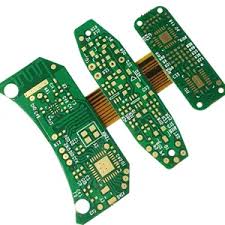
Are flexible PCB boards environmentally friendly?
They also provide superior signal integrity and allow for higher densities, reducing wiring errors and improving reliability. In addition, they are resistant to electromagnetic interference, which is an issue for many electronic products. Finally, they can be finished with a protective coating to shield the circuit from environmental factors that could otherwise damage it.
These qualities make flex circuits an excellent choice for the Internet of Things (IoT), where devices are subject to a variety of environmental conditions, including temperature, humidity, chemical exposure, and vibrations. They are also useful in the automotive industry, where they can improve space allocation and thermal performance. Lastly, they are also popular in medical devices, as they can meet the durability and size requirements of handheld surgical technology and implantable wearables.
Despite their great advantages, it is important to know the limitations of flex PCBs when designing them. Several factors must be taken into consideration, including the size of the dynamic region and the bending amplitude. Narrower traces require greater spacing between them to avoid cracks. In general, a 2:1 ratio of trace width to spacing is preferred for dynamic regions.
Other factors that can damage a flex circuit board include excessive bending and cold temperatures. These can deform the substrate and disconnect the circuit, causing failure. They can also corrode the surface and circuit if they are exposed to chemicals.
To prevent these problems, manufacturers must perform electrical testing on a flex PCB before it is shipped. This testing will ensure that the product has no internal faults and is ready for production.
In order to prevent contamination, manufacturers use a special process called coverlay, or overlay, to protect the exposed circuitry on a flexible circuit board. This is a more environmentally friendly process than solder masking, which requires multiple layers of materials to separate the copper from the rest of the board. It also saves material from wastage and reduces the amount of chemicals used in the manufacturing process.