
Pilates Reformer Workouts Improve Flexibility and Strength
Reformer workouts offer a great deal of variety, making them fun and challenging. Unlike high-intensity exercises that can strain joints and ligaments, Pilates’ low impact movement and varying levels of resistance decrease the risk of injury and are suitable for many different fitness levels. It’s also an ideal workout for people dealing with injuries or those who are recovering from surgery.
The reformer offers a full-body workout, working every muscle from your deep front abdominals to your back and side waist to your glutes and your pelvic floor, all while improving balance, coordination, spatial awareness and flexibility. Using the machine’s spring-loaded carriage and a series of props, you are able to target every inch of your body, building core strength while stretching and strengthening all other muscles throughout the session.
While Pilates is a popular form of exercise, there are some misconceptions about the type of flexibility and strength that it promotes. While a higher level of flexibility does have its benefits, it is important to note that there is a difference between functional flexibility and performative flexibility.
Performative flexibility is required to achieve a specific goal or task, like being able to put your leg up in the air or do a handstand. This level of flexibility requires specialized training that isn’t necessarily achievable through a Pilates reformer workout. However, functional flexibility is something that all Pilates practitioners can work towards, and it’s a key component of a healthy lifestyle.
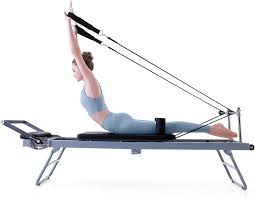
How Do Pilates Reformer Workouts Improve Flexibility and Strength?
Performing a Pilates reformer workout requires concentration and focus to perform the movements correctly, which helps improve the mind-body connection. This focus also teaches you to pay attention to your body’s signals and to avoid jerky movements that can strain joints and muscles. It’s also a good idea to communicate with your instructor about any pain or discomfort, as this will help them adjust the difficulty of the exercises so you can remain safe and healthy.
Pilates’ reliance on proper posture and alignment also reduces the risk of postural imbalances, which can cause discomfort and increase the risk of injuries. This improved body awareness can also help you maintain better posture and spinal alignment outside of class.
While the pilates reformer workouts is a useful piece of equipment, it’s not necessary for at-home reformer workouts. There are plenty of variations that can be done on a mat, and most reformer classes start with an introductory session where the instructor will guide you through all of the different movements. This way, you can get familiar with the equipment and learn how to move through the exercises safely.
When first starting out, it’s a good idea to work with an experienced teacher who can help you find the right balance of challenges and goals for your body. For example, if you have a back problem, it’s generally a good idea to skip the exercises that require you to lift your legs into the air. Similarly, if you are just getting started with reformer workouts, you’ll want to gradually build up your resistance level to avoid overexerting yourself and potentially injuring yourself.